China's "Rooftop Rain" Mist Cooling System Goes Viral: Here's How It Works
As cities around the world search for ways to cope with increasingly frequent heatwaves, some residential neighborhoods in China are using an unusual cooling technology.
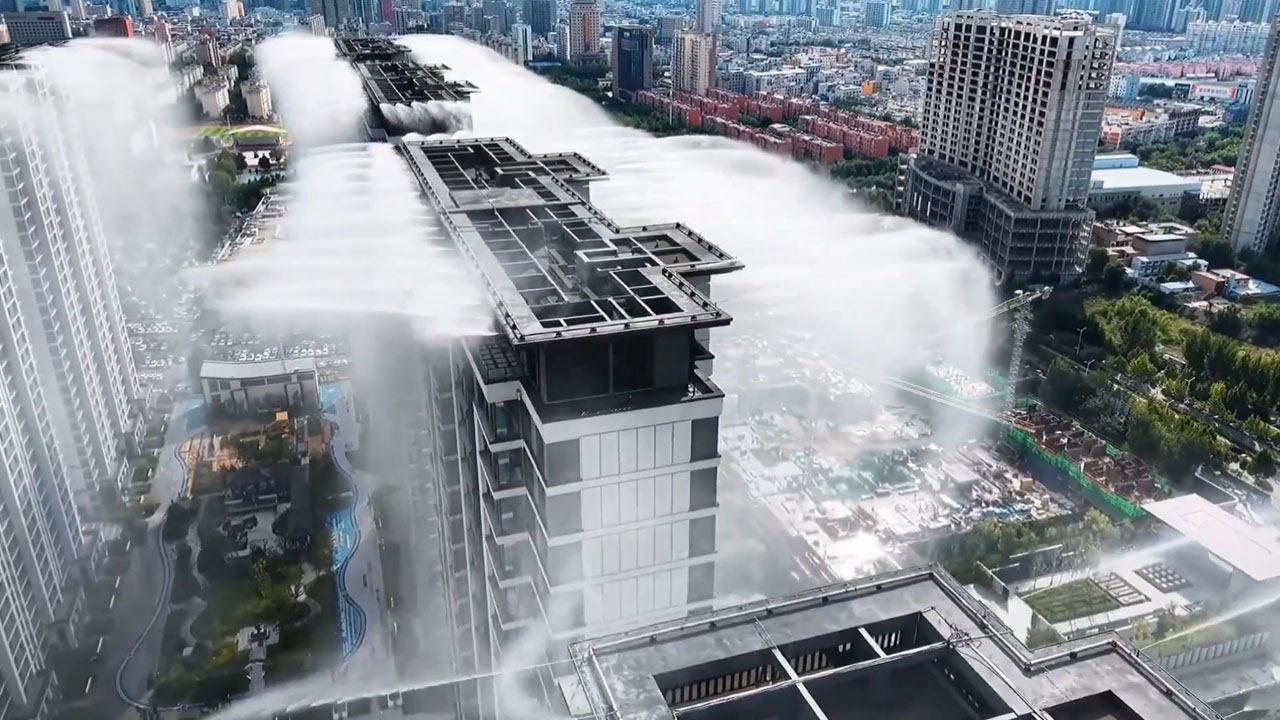
Videos showing a fine water mist spraying from the rooftops of apartment buildings have gone viral online. The system uses high-pressure nozzles to cool the surrounding air, significantly reducing temperatures and helping combat the urban heat island effect.
 XueJia24682, X
The technology is being used in several Chinese cities, including communities in Shanxi Province. Its purpose is not to create artificial rain, but to cool the surrounding area through the evaporation of tiny water droplets, which absorb heat from the air as they fall.
How does the "rooftop rain" system work?
High-pressure nozzles installed on the roofs of residential buildings produce an ultra-fine mist. Because the droplets are extremely small, most of the water evaporates before reaching the ground. This evaporation process absorbs heat from the surrounding air, creating a cooling effect similar to the way perspiration cools the human body.
According to Chinese media reports, the system can lower the temperature of building surfaces and nearby outdoor areas by approximately 5 to 8 degrees Celsius (9 to 14 °F). Besides making outdoor spaces more comfortable, it also reduces heat absorption by rooftops and building facades, decreasing the need for air conditioning indoors.
Experts note that the system performs best in hot, dry climates. When humidity is high, evaporation slows down, making the cooling effect less pronounced.
Viral videos spark global interest
Over the past few days, videos of the so-called "rooftop rain" system have spread rapidly across social media, prompting discussions about the future of urban cooling technologies.
According to media reports, Chinese authorities also confirmed that the footage is authentic after some users speculated that the videos had been generated using artificial intelligence. In addition to lowering temperatures, the water mist is also believed to help reduce air pollution by trapping dust particles and smog.
Not artificial rain, but a local cooling solution
Experts emphasize that this technology should not be confused with cloud seeding or other forms of artificial rainfall. It is a completely different system designed to improve outdoor comfort in residential neighborhoods through localized evaporative cooling.
As heatwaves become increasingly common in Europe and other parts of the world, interest is growing in whether similar systems could be adopted elsewhere as cities look for new ways to adapt to rising summer temperatures.